Dear James: I want to add a brick barbecue grill on our concrete patio. What are some basic tips for sizing, design and construction of a simple-to-build one? — Brian K.
Dear Brian: If you like quick and healthy family meals, adding a brick barbecue grill is a great idea. Designing and building one that uses charcoal, as opposed to gas, probably is your best choice for ease of building and for more flavorful foods.
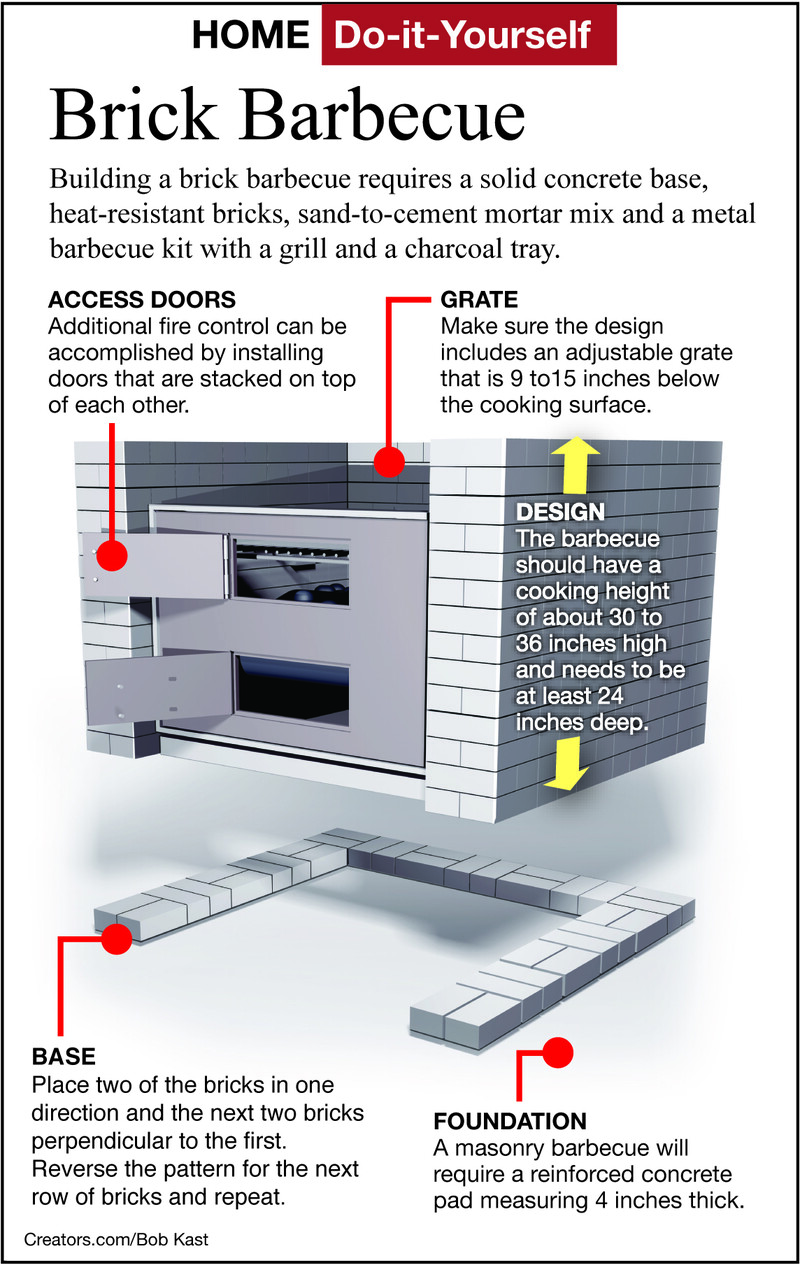
You will have less control over the cooking heat with a charcoal grill, but there are some things you can do to improve it. To help control the heat, design your grill with sets of rests for the charcoal grate so you are able to adjust the fire up or down. Four levels, spaced from 9 to 15 inches below the cooking grate, should do the trick.
Another way to have better cooking control is to install double metal doors on the front of the barbecue. The top door can be used to add charcoal while the lower door helps control the combustion air and heat. Cast iron grates are durable, but very heavy. If you can find stainless steel grates, use them. They are lightweight and last a long time.
When building a new grill, you have two options: building with or without mortar. Many first-time homeowners use the simple mortarless design. It can last years, but it's easy enough to take down and quickly rebuild if you ever decide to move. With a mortarless method, your grill can be ready for use in as little as a weekend.
Since you have put some thought into your soon-to-be-cookout area, you probably have a spot already picked out. Keep in mind the area should be level and made of brick or concrete. If the section you have chosen is neither, you will have to lay a small base for your grill.
Other considerations when choosing a location are wind direction and workspace around the barbecue for any last-minute food preparations. A cooking surface height of about 30 inches is average, and a 16-inch-wide work area on both sides should provide enough space for most cooking tasks. Most people tend to underestimate the amount of workspace they need, so make sure you plan for plenty.
To build an average-sized barbecue, you will need about 500 bricks. Some people use plain white firebricks because they stack nicely and are a very consistent size. Solid masonry bricks also work well and are reasonably priced. With these, you can select various colors and build a unique-looking barbecue. When purchasing your bricks, buy a few dozen extras in case some are damaged.
Using a chalk line, lay the outline for your barbecue on your base slab. Begin by laying out your first course of bricks. Stack the bricks on the base, making sure they are placed together tightly. This helps make the grill stable and helps control combustion air. Place two of the bricks in one direction and the next two bricks perpendicular to the first. Reverse the pattern for the next course of bricks and repeat.
After you have installed the grates, fire it up and have some shrimp on the barbie!







View Comments